
Newton Hearings: When Facts Affect Sentence


A guilty plea does not always resolve the facts. In many criminal cases, the real dispute begins after conviction, when the prosecution and defence advance sharply different versions of events. When those differences affect the sentence, the court may decide the issue through a Newton hearing. Early, focused advice on a Newton hearing for criminal defence in the UK helps ensure the court bases its sentence on evidence rather than assumption.
At Holborn Adams, we treat Newton hearings as a crucial step, not an add-on. Even though the procedure is more limited than a trial, the repercussions can be equally significant. Before imposing a punishment, the court must determine which facts are important and address them.
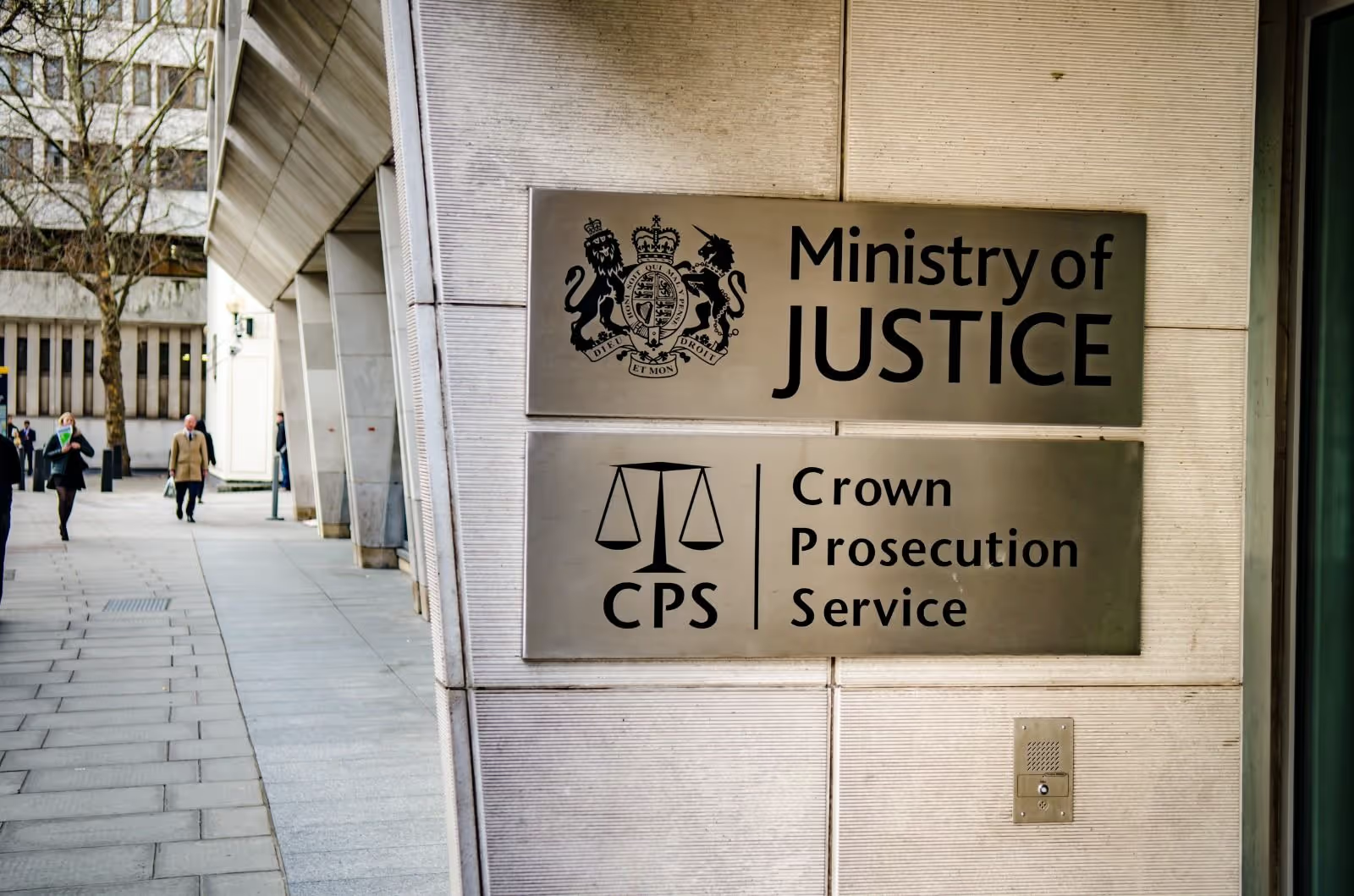
When a Sentence Turns on Disputed Facts
Newton hearings arise when the defence accepts guilt but challenges prosecution allegations that would increase the sentence. Common disputes involve the level of harm, degree of intent, use of force, or the defendant’s role.
Courts do not just believe what the prosecutor claims just because it sounds more severe. The prosecutor has to prove the facts if the defence does not agree with them. It is our responsibility to figure out if the disagreement is real and serious enough to change the sentence.
That early assessment shapes every step that follows. Experienced criminal defence solicitors recognise that not every disagreement justifies a hearing. Strategy matters and, in most cases, reaction does not.
Procedure, Proof, and Control of the Issues
Newton hearings follow clear principles. The prosecution bears the burden of proving disputed facts beyond a reasonable doubt. The defence does not need to prove an alternative account. It must test the prosecution's case.
We ensure the court understands the scope of the hearing from the outset. We ask:
- Which facts do both sides agree on?
- Which facts remain disputed?
- Why do those disputes affect the sentence?
Without that structure, hearings drift and outcomes lose predictability.
Procedure often determines the outcome. We assess the material with care, keep submissions tight, and make sure the court applies the correct legal test. Many people searching for criminal solicitors near me underestimate how technical and exacting this stage can be.
Evidence That Makes a Difference
Newton hearings rely on evidence, not narrative. The court may hear witnesses, review documents, or consider expert material, but only where that material helps resolve the dispute.
We are disciplined in how we do things. For us, the quality of the evidence is more important than its quantity. Phone data, medical records, CCTV footage, or accounts from witnesses are all examples of usable proof.
We warn against overreaching. Unnecessary evidence can weaken a defence position. The aim is not to retry the case, but to resolve sentencing facts fairly.
Midway through proceedings, decisions about a Newton hearing for criminal defence in the UK often determine whether the sentence reflects reality or exaggeration.
Mitigation or Newton Hearing
One of the most important decisions is whether to pursue a Newton hearing at all. Some disputes fit better within mitigation than formal fact-finding.
We advise clients on how mitigation can place conduct in context without conceding harmful facts. Background, mental health, or situational pressure may explain behaviour without denying responsibility.
If the sentence turns on disputed facts, mitigation will not be sufficient. We outline the advantages and risks of a Newton hearing, including the possibility that the judge may accept the prosecution’s account.
For criminal defence lawyers, honest advice at this stage builds trust and manages expectations.
What Happens at a Newton Hearing?
The sentencing judge usually conducts the Newton hearing. The court hears evidence only on the disputed issues and after making findings of fact, the judge proceeds directly to sentence.
Preparation must be precise. We narrow down the topics, plan a focused cross-examination, and steer past redundant confrontations. Judges want things to be quick, clear, and realistic.
The defence case must remain credible. Courts quickly spot attempts to minimise conduct without evidential support. We advance arguments that the evidence can sustain and the court can accept.
This is where experienced criminal defence solicitors add real value. Advocacy style and focus often matter as much as the evidence itself.
Common situations that lead to Newton hearings
- Disputes over intent or planning
- Disagreement about harm or injury
- Alleged aggravating features not admitted
- Conflicting accounts of a defendant’s role
Each requires a tailored response.
After Sentence
Once the court passes sentence following a Newton hearing, options narrow but do not disappear. We advise promptly on appeal prospects where the court has misapplied the burden of proof, relied on unsupported findings, or taken an unfair approach to disputed facts.
Deadlines move quickly in a large majority of criminal cases. We obtain transcripts and settle grounds without delay. Not every adverse outcome justifies an appeal, and we give clear advice on prospects.
New evidence may support a return to court in some circumstances, but the bar is still quite high. Clients benefit from realistic guidance rather than overoptimism.
Those working with criminal defence lawyers who understand this terrain make better decisions under pressure.
How Holborn Adams Approaches Newton Hearings
At Holborn Adams, we:
- Identify sentencing disputes early
- Advise clearly on an agreed basis, versus hearing
- Prepare evidence with focus and discipline
- Advance precise submissions on burden and proof
- Integrate mitigation into the wider strategy
We work calmly and methodically. Newton hearings are not about arguing for no reason. They exist to prevent sentencing outcomes driven by untested allegations.
Practical Points to Remember
- Do not assume a guilty plea resolves factual disputes
- Avoid informal concessions without advice
- Preserve the material relevant to the sentence
- Raise concerns early, not on the day of the sentence
Taking the Next Step
When a sentence depends on disputed facts, careful handling matters. Expert advice on a Newton hearing criminal defence in the UK can prevent outcomes shaped by assumption rather than proof. If you face a sentence and key facts remain contested, early guidance from experienced criminal defence solicitors can make a decisive difference.
This article provides general information and does not constitute legal advice. For confidential assistance, contact Holborn Adams to speak directly with a solicitor.

