
Defence Statement Criminal Trial UK: Setting the Case Early


Criminal proceedings rarely fall apart in court. They take shape much earlier and often on paper. A well-prepared defence statement in a criminal trial in the UK can quietly shift the direction of a case, long before a jury is even sworn in.
Most people expect the turning point to come during cross-examination. In reality, it often starts with structure. What is accepted? What is challenged? What is the prosecution required to prove?
That is the role of the defence statement. It is not a formality but a line drawn early. At Holborn Adams, we treat it that way. We build the case from the ground up, starting with disclosure, evidence, and a clear theory. Everything else follows.
What is a Defence Statement in a Criminal Trial in the UK, and Why Does It Matter?
In a defence statement, the person who is being accused makes their case very clear. It spells out the problems that are being argued over, what the defence will be, and where the prosecution's case will be tested.
The requirement comes from the Criminal Procedure and Investigations Act 1996 (CPIA). Under section 6A, the defence must provide a written statement in Crown Court cases. It is not optional; it carries weight. That weight cuts both ways.
A well-drafted statement sharpens the issues. It forces clarity, prompts further disclosure from the prosecution, and sets expectations early.
A vague or poorly considered statement does the opposite. It leaves room for assumptions and limits opportunities later. The court expects precision. So do we.
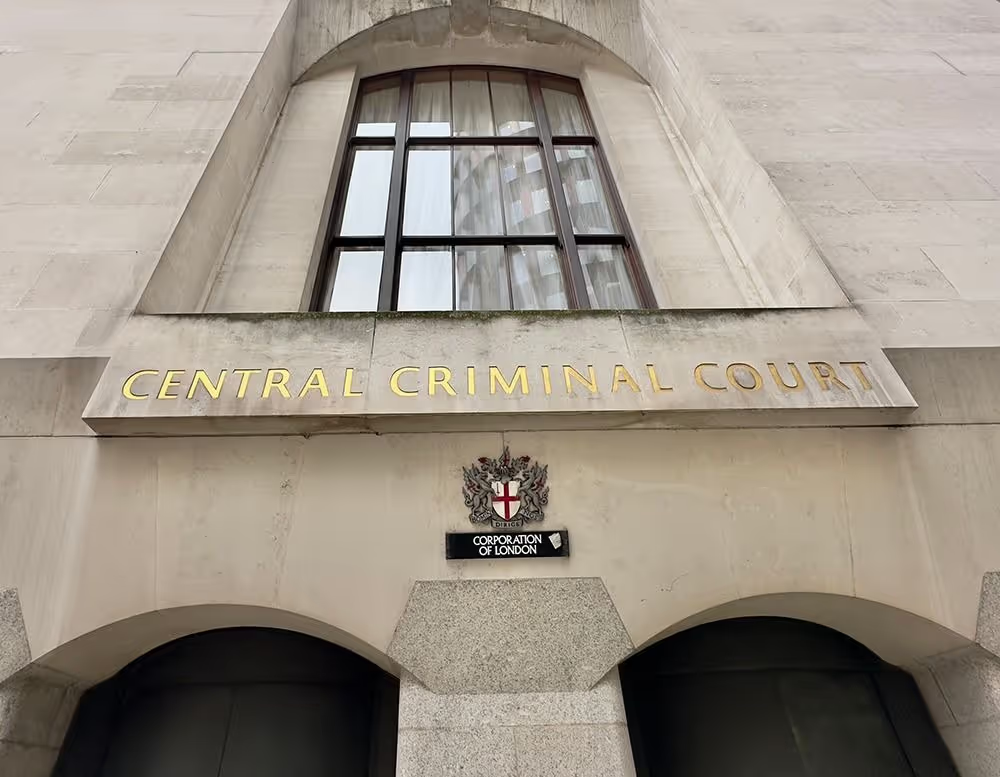
How Does a Defence Statement Shape Case Management in Criminal Trials in the UK?
Case management is where the structure of a trial is set. Hearings are timetabled. Issues are identified. Directions are given.
The defence statement sits at the centre of that process.
Once served, it informs how the case progresses:
- What evidence is relevant
- What needs to be disclosed
- Which witnesses matter
- How long the trial will take
Under the Criminal Procedure Rules, courts actively manage cases to avoid delay and focus on the real issues. A clear defence position helps the court to do that. Midway through any defence statement in a criminal trial in the UK, this becomes clear. The document is not static. It drives decisions.
We have seen cases shift simply because the defence position was set out properly, disclosure was improved, and weak points in the prosecution's case surfaced earlier than expected. Clarity has a way of doing that.
What Happens If a Defence Statement Is Incomplete?
An incomplete statement creates problems.
The court may draw adverse inferences under section 11 of the CPIA. That means the jury could question why certain points were not raised earlier. It also limits the defence’s ability to challenge evidence later. Points not identified at the right stage can become harder to rely on. That is why preparation matters. Every line has a purpose.
What Must Be Included in a Defence Statement in a Criminal Trial in the UK?
The law sets out the essentials.
A defence statement must:
- Outline the nature of the defence
- Indicate the matters in dispute
- Explain why the defendant takes issue with the prosecution
- Set out any points of law being relied upon
In practice, it goes further than that.
It becomes a working document. A route map for the case. It aligns:
- Witness evidence
- Expert input
- Cross-examination strategy
We treat it as the foundation of trial preparation, not a procedural step to get out of the way.
How Does Disclosure Work Alongside a Defence Statement in a Criminal Trial in the UK?
Disclosure is a continuing duty. It does not stop once the initial material is served.
Under the CPIA, the prosecution must disclose material that could undermine its case or assist the defence. The defence statement plays a key role here. A clear statement can trigger further disclosure requests. It highlights what matters and narrows the focus.
Digital evidence often sits at the centre of this process. Messages, location data, third-party records. These are rarely straightforward. They take time. They require persistence.
We review schedules carefully, we request material that adds value, and, where disclosure falls short, we make targeted applications.
An effective defence statement within a criminal trial in the UK often opens doors to evidence that would otherwise remain unseen.
Can Disclosure Failures Affect the Outcome of a Trial?
Yes, and more often than people realise.
Late or incomplete disclosure can undermine the fairness of proceedings. Courts have the power to intervene. In some cases, it leads to adjournments. In others, more serious consequences follow. The key is spotting the issue early and acting on it.
How Are Experts and Witnesses Managed in Criminal Trials in the UK?
Not every case requires expert evidence. When it does, timing and clarity matter. Experts must be instructed properly. Their role must be defined. Their evidence must align with the defence case theory.
Witnesses follow a similar pattern. Their relevance must be clear from the outset. The defence statement helps establish that link. We identify the issues early. Then we match the evidence to those issues. It sounds simple. It rarely is.
Careful preparation avoids last-minute decisions. It keeps the case focused. It avoids unnecessary complications.
What are the Key Hearings in Case Management For Criminal Trials in the UK?
Criminal trials follow a structured path.
Key hearings include the following:
- The Plea and Trial Preparation Hearing (PTPH)
- Further case management hearings, where required
- Applications relating to evidence, disclosure, or procedure
Each stage builds on the last.
The defence statement informs what happens at these hearings. It shapes directions. It influences timelines. It determines what needs to be resolved before trial.
Courts expect progress and that issues are identified early. A clear approach keeps things moving in the right direction.
What Preparation is Required Before Trial?
Preparation is where cases are won quietly. We organise evidence carefully, build a clear case theory, and prepare for cross-examination with a purpose.
Every element connects:
- Documents
- Witness statements
- Expert reports
- Timelines
Nothing sits in isolation. A strong defence statement for a criminal trial in the UK feeds directly into this stage. It keeps the case anchored. It avoids drift.
There is a rhythm to preparation: Structured. Focused. Consistent.
How Early Should Trial Preparation Begin?
Earlier than most people expect. Waiting limits options. Early preparation opens them. We begin as soon as disclosure allows. Sometimes, before that. The sooner the issues are clear, the more control the defence has.
What Outcomes Can Effective Case Management Achieve?
A sound case management rarely draws attention. That is the point. It leads to:
- Clearer issues at trial
- Fewer surprises
- Better use of court time
- Stronger presentation of the defence
In some cases, it prompts reconsideration of the prosecution’s position. In others, it sharpens the defence case for trial.
Either way, it creates structure.
As the case moves forward, the value of a defence statement under UK criminal trial law becomes obvious. It holds the case together. It keeps the focus where it belongs.
A Measured Approach, Applied Early
At Holborn Adams, we approach defence statements and case management with discipline.
We organise disclosure carefully. We identify what matters and what does not. We prepare with counsel in a structured way, focusing on the issues that will decide the case. Clients often arrive with uncertainty. That is expected. The process can feel fragmented at first but we bring order to it through clear advice, practical steps, and no unnecessary complication.
If you are dealing with a defence statement in a criminal trial in the UK, early input can make a real difference. The right structure, set at the right time, shapes everything that follows.
For guidance on defence statements and case management in criminal trials, speak with Holborn Adams. We will review your position carefully and move forward with purpose.

