
Chronologies: Turning Complex Evidence into a Clear Defence


Thousands of messages. Hundreds of transactions. A handful of journeys said to place one person at the scene. Criminal law solicitors see how quickly evidence at scale turns into noise, and a prosecutor reading the file cold tends to believe whichever story it tells first.
A well-built timeline changes the picture. It lines up every message, movement, payment, and document in date order, so contradictions stand out and gaps become visible. Read on to find out how defence chronology works, where it earns its place in a case, and what you can do now to protect your position.
Using Timelines to Test the Prosecution's Case
A prosecution file arrives in the order the police gathered the material, which differs from the order in which events happened. Reshuffling the papers by date lets the defence put one plain question to every allegation: does the sequence support the Crown's theory?
The Crown Prosecution Service (CPS) applies a two-stage test before bringing a charge. The first stage asks whether the evidence offers a realistic prospect of conviction. A clear chronology gives you a practical way to challenge that stage, whether the discussion takes place with investigators before the charge or with prosecutors afterward.
What a Defence Solicitor Records in a Schedule of Events
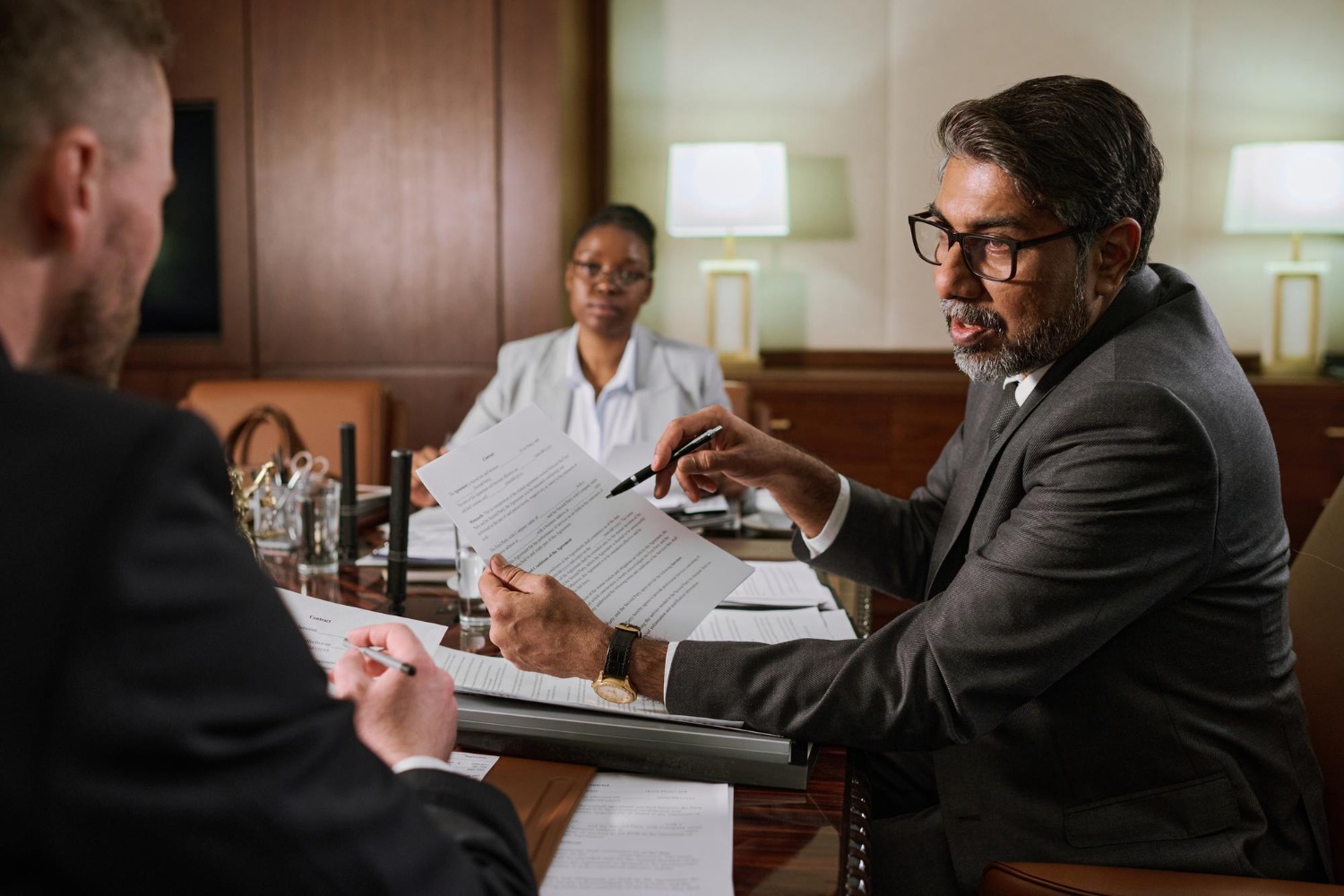
Each entry in a schedule of events carries the same five details: date, time, event, source, and the party relying on it. Sources carry the weight. Each entry links to a document, recording, data extract, or witness statement, so a reader can check the original in seconds.
Facts that both sides accept go in one list. Assertions that rest on memory or inference sit in another, labelled as such. That split protects credibility, because a schedule that blends proof with assumption loses its force the moment the other side spots the join.
Why a Chronology Carries Weight in Complex Cases
Complex cases turn on patterns rather than one dramatic document: who contacted whom, when money moved, which phone sat where, and what happened in between. Seen in isolation, each item looks harmless or damning depending on who presents it. Seen together, the items tell a story that either holds up or falls apart.
Why Criminal Defence Solicitors Build the Timeline Early
Early work pays off. Disclosure before a police interview is often limited, so a solicitor builds the picture from what the police share and from your own records. Under the Criminal Procedure and Investigations Act 1996 (CPIA), the prosecution must disclose material that might reasonably be considered capable of undermining its case or assisting the defence. A chronology shows which gaps to press on when you request that material, and it shows the point at which a missing document starts to matter.
Begin With Events You Can Verify
Start with facts that both sides accept. Dates on bank statements, timestamps on footage, the minute a train ticket was scanned, and the header on an email - these anchor the whole schedule. Footage from closed-circuit television (CCTV) carries a clock that can be minutes, or even hours, out of real time, so check the offset before relying on any entry.
Trace every date and time to a document, recording, or financial record whenever possible. Memory makes a poor anchor. Paper and data hold steady.
Setting Competing Accounts Side by Side
A timeline lets you place each witness account next to objective evidence. Changes in a version become easy to spot: the first account given to police, the statement taken weeks later, and the evidence given in court. Impossible sequences surface too, such as a person placed in two locations within minutes, and unexplained periods show up as blank rows.
Honest mistakes happen on every side of a case, so the schedule records differences as facts and leaves the argument to the advocate.
Cross-Check Every Data Source
Digital evidence persuades more when several sources agree. Phone activity can be compared with travel records, access logs, payments, and footage. A prosecution theory that fits all of them stands on firm ground; a theory contradicted by one source invites scrutiny of that source.
Cell site analysis, for instance, estimates the area a phone is connected to, which is a wider claim than placing a handset at a single address. An expert can walk a court through those limits in plain terms. Device clocks, time zones, and daylight saving shifts add further room for error, and a careful reviewer catches them.
How Chronologies Strengthen Advocacy
A good schedule helps counsel prepare cross-examination, frame disclosure requests, and explain a tangled case to the court in plain terms. It supports pre-trial representations as well. In the Crown Court, a defence statement must set out the nature of the defence, and a chronology prepared early feeds straight into it.
Many criminal law solicitors hand counsel a short, sourced schedule alongside the papers, because a judge and jury follow a sequence far more readily than a stack of exhibits.
Keep the Schedule Analytical
A chronology that argues has stopped being a chronology. Neutral descriptions and clear sourcing make the critical inconsistencies more persuasive because the reader reaches the conclusion on their own.
Write entries as facts: "Message sent at 21:14, per extraction report, page 12." Keep every entry to one event and one source, and leave adjectives for the advocate. A spreadsheet dressed as an argument invites doubt about everything else in it.
Steps to Protect Your Position Early
These steps help you protect your position while an investigation or case is live:
- Keep every message, email, receipt, photograph, and other time-stamped record safe.
- Record key events, decisions, and developments in date order as they happen.
- Only make contact with complainants and witnesses through your solicitor.
- Speak to a specialist before you give a detailed account, make representations, or agree to a procedural step.
- Review strategy as new evidence emerges.
Honest and consistent answers are critical in any interview or statement, which is why advice comes first. Timing counts. Early, structured advice identifies the strongest next step and reduces the risk of missed evidence or strategic openings.
Working With the Criminal Defence Lawyers at Holborn Adams
Holborn Adams is a privately funded criminal defence firm that has acted for private clients since 2013, with a particular focus on pre-charge representation. Our solicitors and specialist barristers work from London, and our clients span a range of international jurisdictions. We build chronologies early, test the Crown's material against them, and explain what they reveal in plain language. Our approach is proactive, and we coordinate strategies where criminal proceedings carry wider professional, business, or reputational risk.
Our criminal law solicitors work with specialist barristers, including King's Counsel where a case demands it, so a complex file reaches court as a clear defence.
Holborn Adams is regulated by the Solicitors Regulation Authority (SRA). A member of our legal team is available 24/7, and every enquiry call stays confidential. After your initial consultation, we provide a fixed-fee quote for your defence.
Call us as soon as you learn of an allegation. The earlier we begin, the clearer a timeline can be.
This article offers general legal information and does not constitute legal advice. For confidential advice about defence chronologies and complex evidence, contact Holborn Adams to speak with an experienced solicitor.
Frequently Asked Questions About Defence Chronologies
1. What is a chronology in a criminal case?
A chronology lists the events in a case in date order; each linked to its source. Everything is presented in a single sequence, so you can see how documents, messages, and witness accounts align.
2. What does a schedule of events mean in criminal law?
Think of it as a sourced table of dates, times, and events. A defence solicitor uses it to compare evidence and catch contradictions.
3. How does a timeline help a criminal defence?
It lines events up by date, and the weak spots surface: gaps, impossible sequences, and accounts that change. It also guides cross-examination and disclosure requests.
4. What evidence goes into a defence chronology?
Messages, call logs, financial records, footage, travel data, documents, and witness statements all feed the schedule, each tied to a source.
5. When should a defence chronology be prepared?
Begin early, ideally before the police interview. Early work shapes interview strategy, disclosure requests, and pre-charge representations.
6. Can a chronology help get a case dropped before charge?
A clear, sourced timeline shows the CPS where the evidence falls short of the charging test. Outcomes depend on the facts of each case.
7. What is disclosure in a criminal case?
Disclosure is the prosecution's duty under the CPIA to share material that could undermine its case or assist yours.
8. How do solicitors test phone and digital evidence?
They compare device data with travel records, payments, and footage; check clock settings; and instruct experts where needed, for example, on cell site analysis.
9. What should I do if I am under investigation?
Contact a solicitor before any police interview. Preserve your messages, receipts, and records, and route contact with witnesses through your solicitor.
10. How do I find criminal defence solicitors near me?
Holborn Adams has teams in London and a legal team available 24/7 by phone, with remote consultations for clients elsewhere.

